







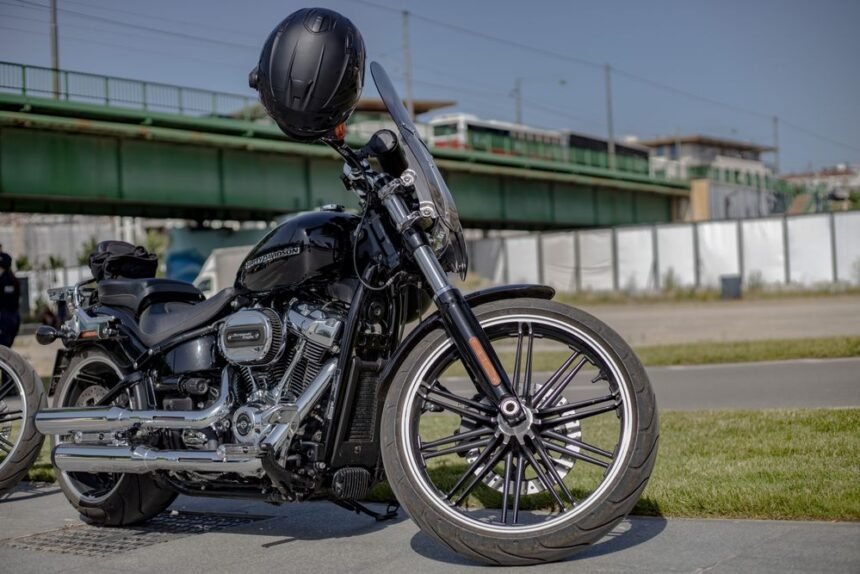
Dealerships closing, layoffs confirmed, annual festivals canceled — it’s easy to see why riders and prospective buyers are asking whether Harley-Davidson is on its last ride.
The short answer is no. But that doesn’t mean everything is fine. Harley is under real financial pressure, and what’s happening right now deserves a clear-eyed look rather than either panic or dismissal.
This article breaks down the actual financials, what the layoffs and closures mean in practice, and what the company is doing to try to turn things around.
Harley-Davidson’s 2025 Financials Were Bad — Here’s How Bad
Let’s start with the numbers, because they matter.



Harley-Davidson’s full-year 2025 revenue came in at roughly $4.47 billion — down about 14% from the year before. The Motor Company segment, which is the core motorcycle business, posted an operating loss of approximately $29 million for the year.
The fourth quarter was especially rough. Q4 alone showed an operating loss of $361 million on revenue of just $496 million. That’s a significant hit for a single quarter.



On the sales side, global retail sales of new motorcycles fell 12% year-over-year. Global shipments dropped 16% to around 124,477 units.
These are serious numbers. A company losing money on operations, shipping fewer bikes, and watching revenue shrink by double digits is clearly under pressure. But pressure is not the same as collapse. Harley is still a multibillion-dollar company with an active product line and a forward-looking strategy — which we’ll get to shortly.
What the Layoffs and Production Cuts Actually Mean
Harley confirmed a reduction in force in early 2026 that affected both plant workers and salaried staff at its Milwaukee headquarters. The company described this as part of a broader effort to “stabilize the business” amid declining sales and economic headwinds.
Management’s language around all of this has centered on the word “reset.” The idea is to slow production, clear excess inventory, and cut costs across the organization — then rebuild from a leaner base.



Dealer inventory tells part of this story. At the end of 2025, global dealer inventory was down 17% compared to the prior year. By Q1 2026, that figure had reached 22%. That’s not a collapse in orders — it’s a deliberate correction. Harley deliberately slowed production to stop flooding dealerships with bikes that weren’t selling fast enough.
Layoffs and production cuts are painful for the people involved, and they shouldn’t be minimized. But in corporate turnarounds, they’re standard tools. They signal a company trying to right-size itself — not one preparing to shut off the lights.
Why Harley-Davidson Dealerships Are Closing
For many riders, the most visible sign of trouble isn’t a financial report — it’s driving past a shuttered dealership that used to be a community hub.
Multiple Harley dealerships across the U.S. have closed in recent years. The closure of Taboo Harley-Davidson in Alexandria, Louisiana is one named example that illustrates how real these losses are at the local level. These aren’t abstract statistics; they’re places where people bought their first bike or brought it in for service year after year.
There are a few overlapping reasons behind the closures. Some are tied to broader economic pressure — higher interest rates have made big-ticket purchases harder to finance, and discretionary spending has tightened across the board. Some closures reflect Harley’s inventory strategy: when dealers receive fewer bikes to sell, margins shrink and smaller operations can struggle to stay viable.
The tighter inventory also means fewer models on showroom floors at the dealers that remain open. For a rider walking in off the street, a nearly empty floor can feel like the brand is retreating from their area — even if the company is still operating nationally and globally.
It’s worth being clear here: Harley still maintains a broad dealer network across the U.S. and internationally. The closures are real, but they’re concentrated rather than universal. The picture is uneven, not total.
The 2026 Strategy — Lower Prices, New Models, Fewer Big Events
One of the clearest signs that Harley is not winding down is what it’s actually doing in 2026. The company is actively launching new motorcycle models and shipping them to authorized dealerships worldwide. That’s not the behavior of a brand planning to exit.
A central part of the 2026 approach is making Harley more affordable without stripping the product. The Solo Trim Package introduces entry prices on several key models:
- Street Bob: Starting at $14,999
- Heritage Classic: Starting at $19,999
- Street Glide: Starting at $24,999
Management has framed this as making Harley “more attainable than ever” — a direct response to the criticism that the brand has priced out younger or first-time buyers.
On the event side, the annual Harley-Davidson Homecoming Festival has been canceled indefinitely. Going forward, large celebrations will happen only on major anniversary years, every five years, with the next one planned for 2028. For longtime fans who made the festival a yearly tradition, this is a real loss.
But it’s also a cost-control decision, not a brand burial. Large sponsored events are expensive. Cutting them frees up money for things like product development and dealer support — which matter more to the company’s survival than a summer festival.
Management’s 2026 retail outlook projects global motorcycle sales of 130,000 to 135,000 units. That’s modest, and the company has acknowledged it may post another small loss in 2026, partly due to increased tariffs. But the projection reflects a company managing its expectations carefully — not one planning an exit.
The Bigger Picture: Demographics, Competition, and Tariffs
Harley’s challenges aren’t just internal. Several external forces are pushing against the brand at the same time.
The core Harley rider has historically skewed older. Recruiting younger riders has been a long-standing challenge, and it hasn’t gotten easier. Competitors like Indian, Honda, and other Japanese brands continue to offer cruisers and touring bikes at competitive price points, giving buyers more options than they had a decade ago.
Tariffs are also a factor. Harley cited a significant increase in tariff costs as part of its 2025 headwinds, and that pressure is expected to continue into 2026. For a company that manufactures in the U.S. but sells globally — and sources parts internationally — tariff changes hit multiple points in the supply chain.
None of these problems are unique to Harley, but they compound the internal restructuring challenges. A company trying to reset while also navigating demographic shifts, competitive pricing pressure, and rising import costs is carrying a heavy load.
A Note on the Electric Side
Harley’s electric motorcycle spinoff, LiveWire, has been a subject of debate. Some observers have speculated that the brand may scale back or exit the electric space as part of its broader restructuring. However, no official announcement confirms this. It’s worth watching, but it shouldn’t be treated as a confirmed decision.
So Is Harley-Davidson Going Out of Business?
Based on available evidence: no. But it is going through something genuinely difficult.
The company lost money on operations in 2025. Dealerships have closed. Thousands of workers have been laid off. The Homecoming Festival is gone. Inventory is at multi-year lows and the retail outlook for 2026 is cautious at best.
At the same time, Harley is a publicly traded company that continues to issue financial guidance, release new models, and adjust its pricing strategy. These are not the actions of a company preparing to shut down. They’re the actions of a company in a painful but managed turnaround.
For anyone following the broader business world, this kind of cycle isn’t unusual. Legacy brands in capital-intensive industries often go through periods of contraction — closing locations, cutting staff, pulling back on marketing — before stabilizing. Whether Harley executes that stabilization successfully is a genuine open question. But there’s a meaningful difference between “struggling” and “going out of business,” and right now, Harley is clearly the former.
For practical guidance on how businesses navigate financial restructuring and what signals actually indicate long-term risk, BusinessBaseMag covers these topics in depth.
What This Means If You’re a Rider, Buyer, or Employee
If you own a Harley, the immediate risk to parts availability and warranty support is low. The company is still operating, still maintaining its dealer network, and still producing bikes.
If you’re considering buying a new Harley in 2026, the Solo Trim pricing means some models are now more accessible than they were a few years ago. That’s worth factoring in alongside the uncertainty.
If you work for Harley or a dealership, the picture is harder. Production cuts and workforce reductions are real, and the company hasn’t promised stability at any specific facility. The reset language from management is honest about pain without offering guarantees.
And if you’re watching as a fan — someone who loves the brand and the culture around it — the honest answer is that Harley looks different today than it did five years ago. Smaller in some ways, quieter in others. But still here, still making motorcycles, and still trying to figure out what the next chapter looks like.
Read Also: