





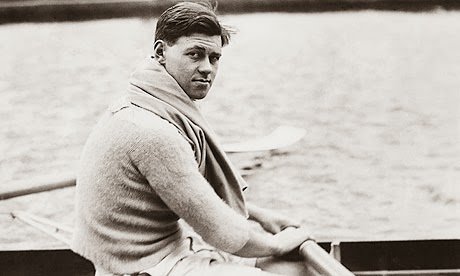
Most people come across the name Ran Laurie through a fan search for Hugh Laurie — or maybe through a genealogy site that throws up an unexpected result. Either way, what they find is a man who had a genuinely remarkable life, completely separate from his famous son’s career.
This profile covers who Ran Laurie actually was: where he came from, how he became one of Cambridge’s finest rowers, what took him to Sudan, and how he ended up winning Olympic gold before settling into life as a family doctor in Oxford.
Who Was Ran Laurie?
His full name was William George Ranald Mundell “Ran” Laurie. He was born on 4 May 1915 in Grantchester, Cambridgeshire, England, and was of Scottish descent. He died on 19 September 1998 at the age of 83, from Parkinson’s disease.
Today, many people know him as the father of actor Hugh Laurie — the British comedian and star of the American television series House M.D. But Ran had his own notable public record well before Hugh became a household name.
He was an Olympic gold medalist, a former colonial administrator in Sudan, and a working general practitioner in Oxford for much of his later life. He was not a media celebrity. His public profile came from sport, service, and medicine — not from television or film.
Family Origins and Early Life
Ran Laurie grew up in modest but education-adjacent circumstances. His father, William Walker Laurie, worked as a tenant farmer and later took a job with the Ely Sugar Beet Company. His mother, Margaret Grieve (née Mundell), took in paying guests to supplement the family income.
During the Second World War, Margaret worked as a live-in housekeeper for the Master of Selwyn College, Cambridge. That connection to Cambridge — even in a domestic and practical sense — put the Laurie family close to the kind of institutions that would later shape Ran’s career directly.
Ran attended Monkton Combe School, a boarding school in Somerset with a strong rowing tradition. He then entered Selwyn College, Cambridge, in 1933. His path from school to university was shaped partly by the academic circles his family moved near, even if the family itself wasn’t wealthy.
A Cambridge Rower and Three Boat Race Victories
At Cambridge, Ran Laurie made his mark as a rower — and not just as a participant. He became a stroke, which is the rower who sits closest to the stern and sets the rhythm and pace for the entire crew. It’s a position that demands both technical skill and composure under pressure.
He rowed in three consecutive winning Cambridge Boat Race crews: in 1934, 1935, and 1936. He stroked the boat in both 1935 and 1936 — meaning he was responsible for setting the pace in back-to-back victories. Later profiles of his rowing career describe him as one of the great Cambridge strokes of the pre-war era.
For readers unfamiliar with the tradition: the Boat Race is an annual rowing race between Oxford and Cambridge universities, held on the River Thames. It has been contested since 1829 and remains one of the most watched amateur sporting events in Britain. Winning it — let alone stroking a winning crew — is considered a significant achievement in British rowing.
Three wins in a row was a strong record by any measure, and it gave Ran a reputation that would follow him well beyond his student years.
Sudan Political Service and the Path to Olympic Gold
After Cambridge, Ran Laurie joined the Sudan Political Service in 1936. This was a British colonial administrative body responsible for governing Sudan during the Anglo-Egyptian Condominium period. Officers in this service took on administrative and judicial roles across different regions of Sudan.
Ran served as District Commissioner of Nyala, among other postings. District commissioners were responsible for local governance in their assigned regions — handling legal matters, public order, and administrative functions for the communities under their jurisdiction.
It was during his time in Sudan that he met Jack Wilson, another Sudan Political Service officer. The two men became rowing partners, training and competing together despite being based far from the structured environment of a British rowing club.
Their shared background in elite Cambridge rowing gave them the foundation they needed. When the 1948 London Olympics came around — the so-called “Austerity Games,” held in a Britain still recovering from the economic and physical toll of the Second World War — Ran and Jack Wilson entered the coxless pair event.
They won. Ran Laurie became an Olympic gold medalist at the age of 33.
The 1948 Games carried a particular weight. Rationing was still in effect in Britain. Resources were tight. Many of the athletes competed with limited funding and minimal infrastructure. Winning gold in that context meant something beyond the medal itself — it was part of a broader national moment of pride and recovery. For Ran Laurie, it was the peak of his sporting career and a result that cemented his place in British rowing history.
Medical Career and Later Life
After his time in Sudan, Ran Laurie retrained as a doctor. He worked as a general practitioner in Oxford, building a quiet professional life that stood in contrast to the public recognition his earlier sporting achievements had brought him.
Being a GP in mid-20th-century Oxford meant working within the National Health Service as it developed following its founding in 1948 — the same year as his Olympic win. It was steady, community-focused work: seeing patients, managing ongoing health conditions, and being part of a local practice.
His medical career was, by most accounts, respected and low-profile. He was not a public figure during this period. His name appeared in sporting records and rowing histories, but he was otherwise living and working as a private individual.
Profiles of public figures and their family histories — like those often explored on BusinessBase — frequently show this same pattern: a parent with a substantial, documented public record who nonetheless chose a quieter later chapter.
Marriage, Family, and Hugh Laurie
Ran Laurie married Patricia Laidlaw, a writer, in 1944. Together they had four children: two daughters and two sons. The youngest was James Hugh Calum Laurie — known publicly as Hugh Laurie.
Patricia Laidlaw died in 1989. The following year, in 1990, Ran married (Evaline) Mary Arbuthnot (née Morgan) in Norfolk.
The family’s rowing tradition didn’t stop with Ran. Hugh Laurie followed his father to Selwyn College, Cambridge, and also rowed for the university. He earned his Blue in 1980 — the recognition given to Cambridge athletes who compete against Oxford. The race that year was exceptionally close, with Cambridge losing by a narrow margin.
That parallel — father and son, same college, same sport, same river — is one of the more striking threads running through the Laurie family story. It wasn’t forced or unusual for the time; rowing at Cambridge was both a serious pursuit and a social tradition. But it does reflect how the values Ran lived by — discipline, commitment, precision — carried forward into the next generation, at least in that specific context.
Hugh Laurie has spoken publicly about his Cambridge years and his rowing background on various occasions, though he moved from sport to comedy and acting rather than following his father into medicine or public service.
What the Records Show — and What They Don’t
Ran Laurie’s life is documented mainly through sporting records, Olympic archives, colonial service histories, and a handful of obituaries. There isn’t a large body of personal writing, interviews, or documented anecdotes about what he was like as a person or a father.
What is clear is the factual outline: a man from a modest Cambridge-adjacent background who excelled at rowing, served in Sudan, won Olympic gold in his thirties, and spent his later career as a family doctor. He died in 1998, having lived a life that combined genuine sporting achievement with professional service.
For readers who found his name through a genealogy search or a Hugh Laurie fan site, the short answer is this: Ran Laurie was not just “Hugh Laurie’s father.” He was an Olympic champion and a physician who had a full, documented life of his own. The connection to Hugh is real and interesting, but it’s only one part of the picture.
A Brief Summary
- Full name: William George Ranald Mundell “Ran” Laurie
- Born: 4 May 1915, Grantchester, Cambridgeshire, England
- Died: 19 September 1998, aged 83 (Parkinson’s disease)
- Education: Monkton Combe School; Selwyn College, Cambridge (from 1933)
- Rowing: Three consecutive Cambridge Boat Race wins (1934, 1935, 1936); stroke in 1935 and 1936
- Career: Sudan Political Service (from 1936); District Commissioner of Nyala; later GP in Oxford
- Olympic achievement: Gold medal, coxless pair, 1948 London Olympics (with Jack Wilson)
Read Also: